Gum Disease Treatment in Pittsburgh | Edgewood Dental Associates
CallGum Disease Treatment in Pittsburgh
Bleeding gums, persistent bad breath, or gums that look a little puffy and red are not things you just have to live with. They are some of the most common signs of gum disease, and the good news is that when caught early, it responds really well to treatment. At Edgewood Dental Associates, we treat gum disease at every stage, from early gingivitis all the way through more advanced periodontitis, and for most patients, that means a thorough deep cleaning with no surgery involved.
The earlier you address it, the simpler the process tends to be. We are located at 1789 South Braddock Avenue on Pittsburgh's east side, just a few minutes from Regent Square, Swissvale, and Squirrel Hill. If this is something you have been putting off, we understand, and we are here when you are ready.
Call us at (412) 242-4022 or request an appointment online. No lecture waiting for you at the door.
Before We Get Into It
- Ask about a gum evaluation at your next visit. We check your gum health as part of every routine exam, so it's nothing extra.
- Surgery is rarely the starting point. Most patients start with a deep cleaning, and for the majority, that's all that's needed.
- Plan for two treatment visits spaced a week or two apart, plus a quick follow-up about a month later.
- Bring your insurance card and a medication list. Some medications and supplements can affect how we plan your care.
- Don't wait until something hurts. Gum disease is usually painless until it's already advanced. Early detection makes treatment much simpler.
How Gum Disease Treatment Works
1. A Full Gum Health Evaluation
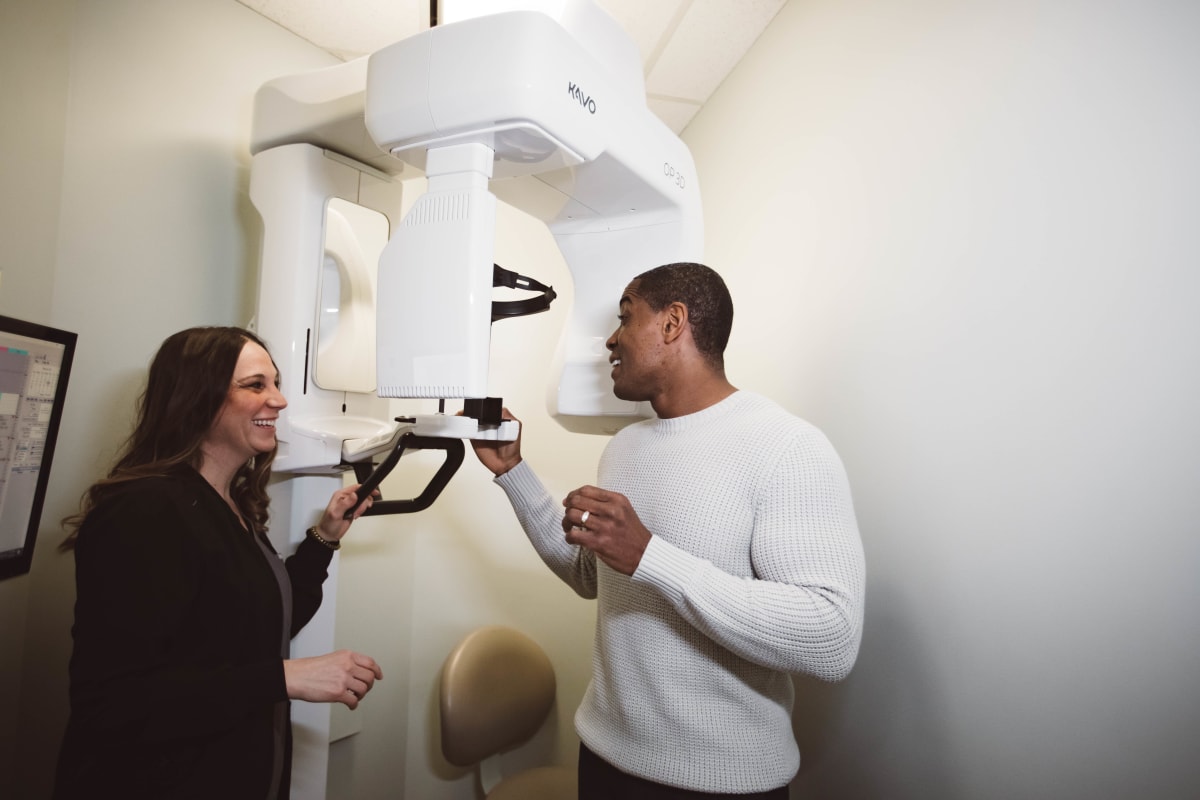
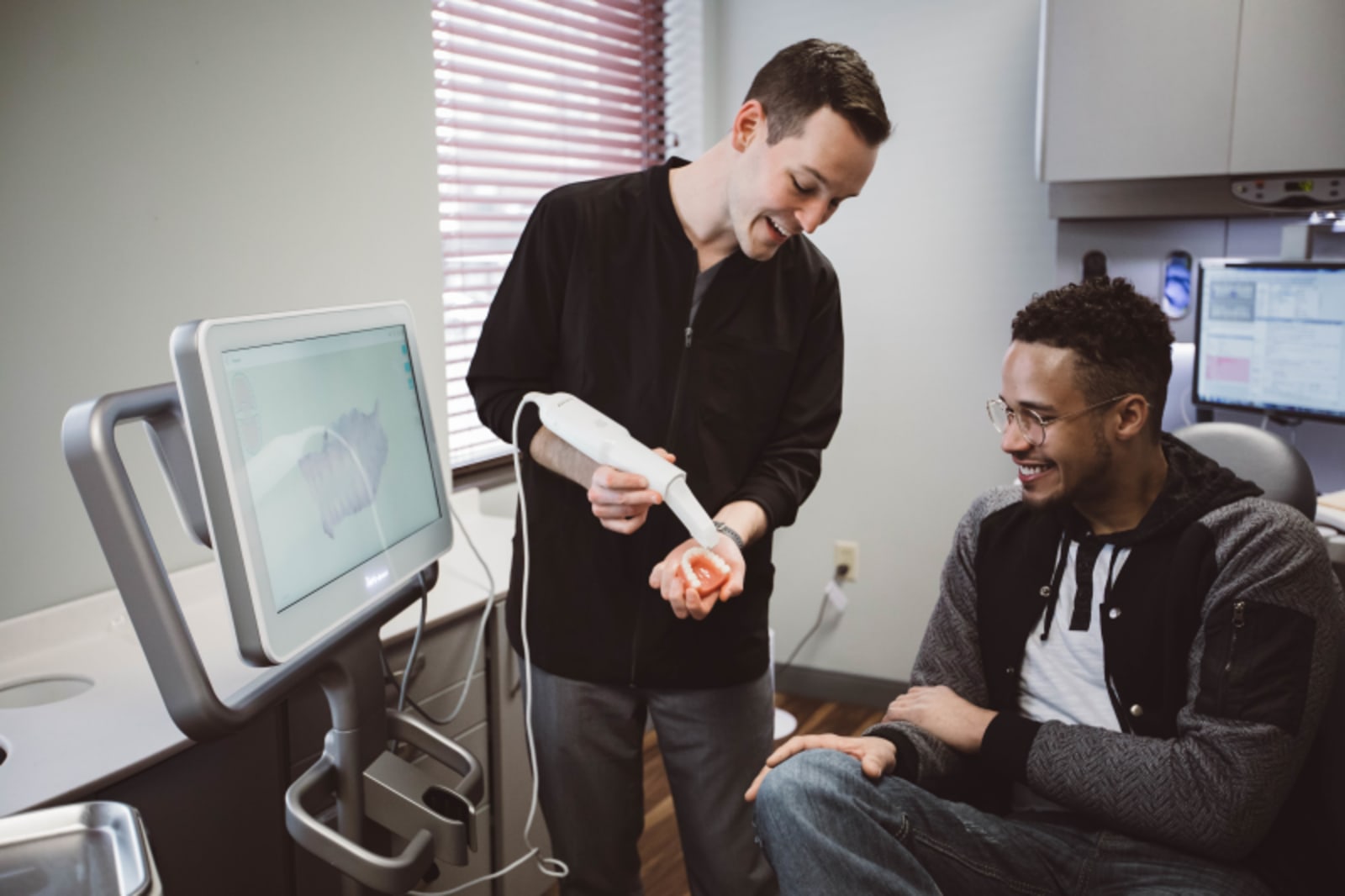
We start by gently measuring the small spaces between your teeth and gums (called pockets) and reviewing your bone levels with digital X-rays. Those numbers tell us whether we're looking at early-stage gingivitis or something that needs a deeper approach.
2. We Walk You Through What We Found
Before anything gets scheduled, you'll hear exactly what the findings mean in plain language. If it's straightforward, we'll say so. If it's more involved, we'll explain what we'd recommend and why. No surprises, no pressure.
3. The Deep Cleaning (Scaling and Root Planing)
This goes a step further than a regular cleaning. We carefully remove plaque, tartar, and bacteria from below the gumline, then smooth the root surfaces so your gum tissue can reattach properly. The area is fully numbed, so you won't feel pain, just some light pressure. We treat one side per visit so the other side can start healing in the meantime.
4. A Healing Check
About four to six weeks after your last cleaning, we re-measure those pockets to see how your gums have responded. Most patients are pleasantly surprised at how much things have improved. If any area needs a little extra attention, we catch it here.
5. Ongoing Maintenance
Once your gums are stable, we move to a maintenance visit every three to four months instead of the usual six. These are shorter appointments that fit right alongside your regular checkups, so there's nothing extra to coordinate.
What Treatment Actually Does for You
- It Helps You Keep Your Natural Teeth. Gum disease is actually the number one reason adults lose teeth that were perfectly healthy otherwise. Treating it protects the bone that holds your teeth in place, and that's worth a lot.
- It Stops the Bleeding. Gums that bleed every time you brush aren't something you just have to live with. Most people notice a real difference within a few weeks of treatment.
- It Gets Rid of Bad Breath at the Source. If brushing and mouthwash aren't fixing your breath, bacteria living below the gumline are probably why, and a toothbrush can't reach them. Treatment clears them out instead of just covering things up.
- It Makes Any Future Dental Work Go More Smoothly. Things like crowns, bridges, and implants all depend on having healthy gums and bone underneath them. Get the foundation right first, and everything else fits better and lasts longer.
- Your Gums Actually Look Better, Too. Inflamed gums tend to look puffy and red. Once they're healthy, they sit snug and pink against your teeth, and that change in your smile is often bigger than people expect.
Who This Is Right For

If you've noticed bleeding when you brush, gums that look red or puffy, persistent bad breath, or teeth that seem to be shifting, those are signs worth taking seriously. The same goes if it's simply been a while and you're not sure where things stand. Gum disease is usually painless until it's already advanced, so waiting until something hurts isn't a reliable strategy. A routine exam is the easiest place to start.
Occasionally, a case calls for a specialist, such as a periodontist, for things like significant bone loss or gum grafting. If that's the situation, we'll tell you early and help point you in the right direction. But the large majority of what we see is handled right here, without surgery.
Cost and Insurance
Because gum disease treatment is a health issue and not a cosmetic one, most dental plans cover the deep cleaning at least in part, and many also cover the follow-up maintenance visits. Coverage varies by plan, so we look up your benefits before anything gets scheduled and give you a written estimate. No surprises before we start.
What you pay depends on how many areas need treatment and how advanced things are. We accept most insurance plans, and if there is a remaining balance, we will talk through payment options. Cost should not be the reason this goes untreated.
Why Patients Choose Edgewood Dental Associates

Gum disease treatment isn't a one-and-done appointment, it's an ongoing relationship. You'll be coming in every few months, so it matters that you feel comfortable and trust the people taking care of you. We're a family-owned practice on Pittsburgh's east side with close to a thousand Google reviews averaging 4.9 stars, and that reputation was built on one thing: how patients feel walking out the door.
- We walk you through your measurements and X-rays in plain language so you always know exactly where things stand.
- We're honest about what we can handle in-house and when a specialist is the better fit. If a periodontist is the right call, you'll hear it early.
- Our team brings decades of combined experience, including advanced training in restorative care and implants, so your gum health is always considered as part of your whole mouth.
- We open at 7:30 am Monday through Friday, making it easy to fit a maintenance visit in before your day gets going.
- We see patients from Edgewood, Regent Square, Swissvale, Shadyside, Forest Hills, Monroeville, Murrysville, Fox Chapel, and beyond, many of them for years.
People who had avoided the dentist for years tell us they came in expecting a lecture and left feeling like they'd talked with someone who actually cared. That's not a coincidence.
Frequently Asked Questions
Does a Deep Cleaning Hurt?
Most patients are surprised by how manageable it is. The area is fully numbed before we start, so there's no pain during the procedure, just some light pressure. Afterward, your gums may feel tender for a day or two and you might notice some cold sensitivity, but an over-the-counter pain reliever is usually all you need.
Can Gum Disease Be Reversed?
In its early stage, gingivitis, yes. A thorough cleaning and consistent home care can clear it up completely. Once it advances to periodontitis, the bone supporting your teeth begins to break down and does not grow back on its own. At that point, treatment focuses on stopping further damage and keeping things stable. That is still a very good outcome, and it is why catching it early matters.
Why Every Three Months Instead of Six?
Once gum disease has been present, the bacteria that cause it rebuild in deeper pockets faster than a six-month schedule can manage. Coming in every three to four months keeps those bacteria from regaining a foothold and protects the progress you have made. Many insurance plans recognize this and cover the more frequent visits.
What Happens If I Leave It Alone?
Gum disease does not go away on its own. It gradually breaks down the bone holding your teeth in place, and that bone loss is permanent. Over time, teeth can loosen and eventually be lost. The earlier it is treated, the simpler and less costly the process tends to be.
Do I Need a Periodontist Instead of a General Dentist?
Not necessarily. Most gum disease cases are handled successfully in a general practice, and we treat a wide range of it here at Edgewood Dental. We refer out when a case involves significant bone loss, deep pockets that do not respond to non-surgical treatment, or the need for gum grafting. If that applies to you, we will tell you clearly and help connect you with the right specialist.
Is Gum Disease Connected to the Rest of My Health?
Yes. Research has established real links between chronic gum inflammation and conditions like diabetes and heart disease. The exact mechanisms are still being studied, but the connection is well-documented. Treating your gums is good for your overall health, not just your smile. Let us know about any health conditions you are managing when you come in so we can factor that into your care.
Let's Take a Look
If your gums bleed, something just feels off, or you've honestly lost track of how long it's been since your last visit, that's reason enough to come in. We'll take a look, walk you through exactly what we find, and explain what next steps would look like. No pressure, no confusing jargon. Just real information so you can make the decision that's right for you.
Give us a call at (412) 242-4022 or request an appointment online. When you reach us, just mention that your gums have been bothering you, or that it's simply been a while, and we'll handle the rest. We're open at 7:30 am Monday through Friday, so finding a time that fits your schedule is usually pretty easy.
Call our Pittsburgh Dentist Today at (412) 242-4022 for your Appointment
We'd love to serve you and your family. Please Call us or request an appointment online to set up your visit. We'll be in touch soon.

Request An Appointment

Request An Appointment
Are you a new or existing patient?
We're looking forward to meeting you!
It looks like there are no appointments currently eligible for online booking. Just give us a call at 412-242-4022!