

Published
What to Expect From a Single-Tooth Dental Implant, Step by Step
Maybe you've had a browser tab open about dental implants for the better part of a year. You've read the forums, watched a procedure video or two at midnight, and you still aren't quite sure what actually happens or how long you'd be living with it. That hesitation is completely understandable. Replacing a tooth is a real decision, and when you're not sure what to expect, it's easy to keep putting it off.
So here's the shape of it. At Edgewood Dental Associates, we place single-tooth implants in three to four clinical stages spread over several months: an assessment and planning visit, the implant placement itself, a healing stretch called osseointegration, and the final crown. The individual appointments tend to be more manageable than people picture. It's the timeline that surprises most folks, and that's the part we'll walk you through here. If you'd rather just talk it out, we're glad to answer questions at (412) 242-4022 or through our contact page.
The short version
- A single-tooth implant usually takes three to six months from first visit to final crown, sometimes longer if preparatory work is needed.
- Most of that time is quiet healing, not appointments.
- The placement appointment runs one to two hours, done under local anesthesia. Most people feel pressure, not pain.
- The healing stage, called osseointegration, is what makes an implant so stable and long-lasting.
- A thorough assessment upfront (including imaging) is how we build a plan that fits your mouth, and how any prep work gets caught early.
The assessment: what happens before any work begins
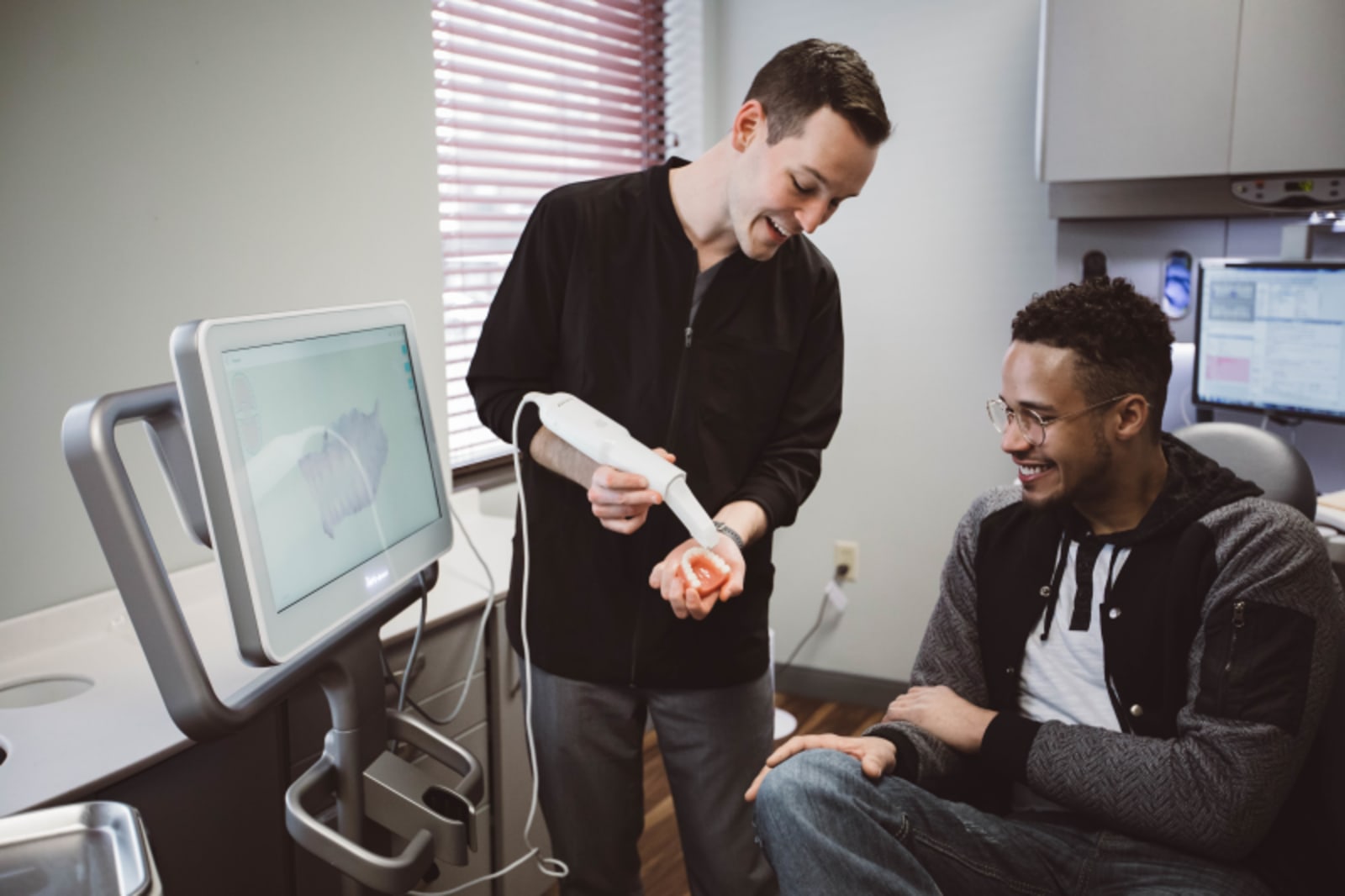
That timeline makes a lot more sense once you see what goes into the very first stage. Assessment is where the whole plan gets shaped, and it's more involved than most people expect.
At your first consultation, we're not rushing to schedule anything. We're getting to know your mouth specifically: the density of the bone where the tooth is missing, the health of the gum tissue around it, and how the neighboring teeth sit. That usually means X-rays and, in a lot of cases, a cone beam CT scan, which gives us a three-dimensional picture of your jaw. This detail matters because an implant anchors directly into bone. We need to know exactly what we're working with before we go any further.
Sometimes the imaging tells us you're not quite ready for placement yet. Bone loss, gum disease, or another underlying issue might need attention first, and a bone graft or gum treatment may come before anything else. That isn't a setback. It's the process doing its job and protecting the result. You can read more about our dental implant services to understand how each step fits together.
If your own research has turned up advice like "go see a good periodontist first," that instinct is a sound one. Some cases genuinely benefit from coordinating with a specialist, and a careful assessment is exactly where we flag that early, rather than discovering it partway through treatment. The whole point of this stage is simple: your plan should fit your mouth, not a template. When you're ready to talk it through, our team of dentists is here to walk you through what makes sense for you.
Placement: what the surgical appointment actually looks like
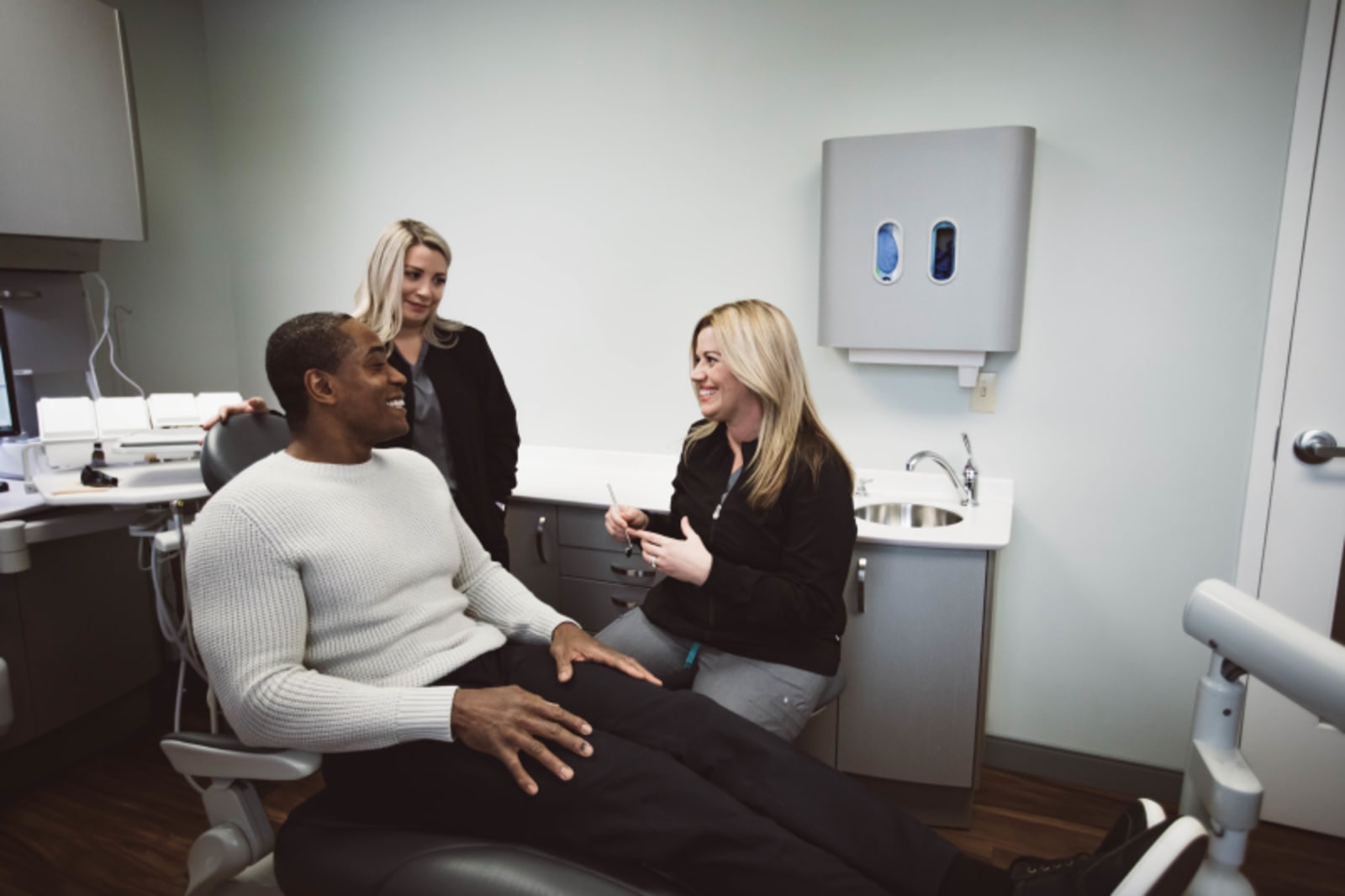
For a lot of people, this is the appointment they've been quietly dreading. But what really happens is far less scary than people think.
Placing a single implant usually takes one to two hours. You'll be fully numbed with local anesthesia before we begin. What most people notice during the procedure isn't pain but pressure, and that distinction matters a lot once you're in the chair. We set the titanium post into the jawbone where your natural tooth root used to sit, and over the following weeks your body gradually grows around it and locks it in place.
In the first few days afterward, here's what you can expect:
- Some swelling and tenderness around the site
- A soft-food diet while things settle
- Discomfort that's generally handled with over-the-counter pain relief
The worry going in is almost always bigger than the appointment itself. And the way we see it, our job isn't to perform the procedure and hand you a post-op sheet. We tell you what's happening as it happens, check in with you along the way, and treat you like someone who deserves a real explanation. There's no judgment here about how long a tooth's been missing or what finally brought you in.
The healing period: why osseointegration takes the time it takes
Once the post is in, the phase setting phase begins: several months where, on the surface, not much seems to be happening. No dramatic appointment, no visible change in the mirror. Underneath the gumline, though, your body is doing some of the most important work of the whole process.
That work is osseointegration. In plain terms, it's your jawbone fusing to the titanium post. Bone tissue slowly grows around and bonds to the implant, creating an anchor sturdy enough to carry a permanent crown for decades. It isn't fast, and it can't be hurried, because bone biology doesn't run on a calendar. Cells remodel, new tissue forms, and the implant becomes a genuine part of your jaw in a way no other tooth replacement can match.
People often ask why it takes so long. The timeline is set by your body, not your schedule, and pushing it would undercut the very thing that makes an implant worth doing.
You won't be walking around with a gap in your smile in the meantime. We typically place a temporary restoration so things look normal while the healing continues quietly behind the scenes.
You'll pop in for the occasional check to confirm everything's progressing the way it should, but there's no heavy lifting on your end. This is the slow middle, and it's precisely what makes the final result last. Have questions along the way? Reach out to our Pittsburgh office and we'll help you feel confident about every step.
Crown placement: the appointment that finishes it
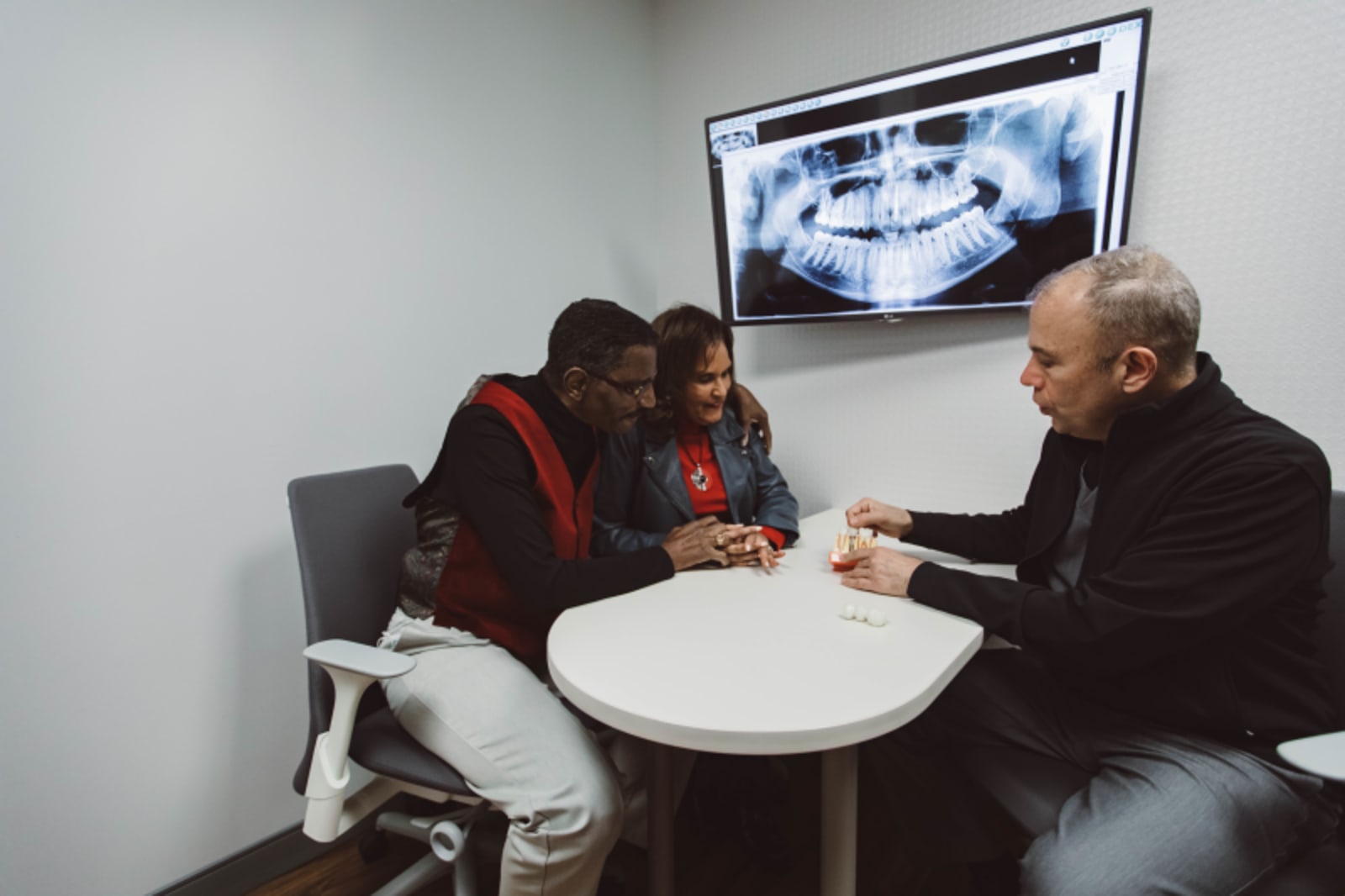
After all that healing, the final visit is almost anticlimactic, in the best way. Once we've confirmed osseointegration is complete, the last step is straightforward: we attach a small connector called an abutment to the post, then place a custom crown on top. That's really it. It's shorter and far less involved than the placement appointment.
The crown is crafted to match the color, shape, and proportion of the teeth around it. Once it's seated, most people can't tell the difference between the implant and their natural teeth. You eat, talk, and smile without giving it a second thought, which is the whole point.
This is where the timeline pays you back. All that slow, unglamorous waiting was building toward a tooth that holds up for the long haul. A well-placed implant asks nothing of you once it's done. If you're ready to take the next step, reach out to our Pittsburgh team to talk through your options.
So how long does the whole thing take?
This is one of the first questions we hear, and it's a fair one. For a straightforward single-tooth dental implant, the full arc from your first appointment to the final crown usually runs three to six months. Cases that need bone grafting or other prep before placement will stretch beyond that.
Three to six months can sound like a lot when you first hear it. But here's what tends to catch people off guard once they're in it: the calendar fills far faster than the schedule does.
Most of that stretch is your jaw quietly fusing to the post. You're not coming in every week, and you're not enduring procedure after procedure. Most people have just a handful of active appointments across the whole thing, with plenty of ordinary life in between.
The waiting is what makes the timeline longer, not constant treatment.
Variability is something to consider as well. Any practice that quotes you one hard number without knowing your bone density, your health history, or whether prep work is needed isn't giving you the full picture.
What you can count on from us is a clear plan after your evaluation. We'll walk you through your specific sequence before anything starts, so you know what each stage involves and why the pacing is what it is.
When you're ready to talk it through
If you're reading this and you're not ready to book anything yet, that's completely fine. Gathering information, thinking it over, deciding whether this is even the right path for you: that's exactly the right way to approach this to make sure you make an informed decision.
What a consultation gives you is the one thing the internet can't: a conversation about your situation specifically. Not a general overview of how implants work in theory, but a real look at your bone, your history, and what the process would actually involve for you.
We're not here to talk you into a treatment plan. We're here to help you understand your options so you can make a decision you feel genuinely good about, whether you live in Edgewood, Regent Square, Squirrel Hill, or anywhere across the east side of Pittsburgh.
When you'd like to move from reading to a real conversation, the team at Edgewood Dental Associates is here Monday through Friday.
Give us a call at (412) 242-4022, and we'll take it from there at whatever pace feels right to you.

