
Published
Choosing the right orthodontic treatment involves understanding how different approaches work, what each option requires from you as a patient, and which method best addresses your specific dental needs. Modern orthodontics offers several effective ways to straighten teeth, from traditional metal braces to clear aligners like Invisalign. Each treatment uses controlled pressure to gradually move teeth into proper alignment, but they differ in how that pressure is applied, how long treatment takes, and what your daily experience will be like.
At Edgewood Dental Associates, we help patients understand their orthodontic options and determine which approach best fits their needs. We provide Invisalign treatment in-house and, when traditional braces or more complex orthodontic care are the better choice, we're happy to refer patients to trusted local orthodontic specialists.
Continue reading to learn about your orthodontic options and what each treatment involves.
Quick Overview
- Treatment Options: Modern orthodontics includes traditional braces, clear aligners like Invisalign, ceramic braces, and lingual braces for different clinical needs
- How It Works: Gentle, consistent pressure gradually moves teeth into proper position through controlled bone remodeling over time
- Comfort Levels: Clear aligners generally cause less acute discomfort than traditional braces, with fewer emergency visits for broken hardware
- Success Requirements: Optimal results depend on consistent compliance, whether that's wearing aligners as prescribed or maintaining excellent oral hygiene with braces
How Do Braces Work to Straighten Teeth?
All orthodontic treatments use the same biological principle: controlled pressure applied over time stimulates bone remodeling around tooth roots. When gentle force is applied to a tooth, specialized cells called osteoclasts break down bone on the pressure side while osteoblasts build new bone on the opposite side. This process allows teeth to move gradually into new positions without damage.
Traditional braces use brackets bonded to each tooth, connected by an archwire that applies consistent directional pressure. The archwire functions like a track that guides teeth toward their ideal positions. During regular appointments, we adjust wire tension or replace wires with different shapes and materials to progressively guide teeth through planned stages. Initial movement becomes visible within the first few weeks as your body responds to the gentle, continuous forces.
Clear aligners achieve similar results through a series of custom-made plastic trays, each designed to move teeth small amounts in specific directions. Each aligner represents one step in your treatment journey; you switch to the next tray every one to two weeks as your teeth adapt to their new positions. Digital treatment planning allows us to predict exactly how your teeth will move throughout treatment.
What Is Invisalign and How Does It Work?
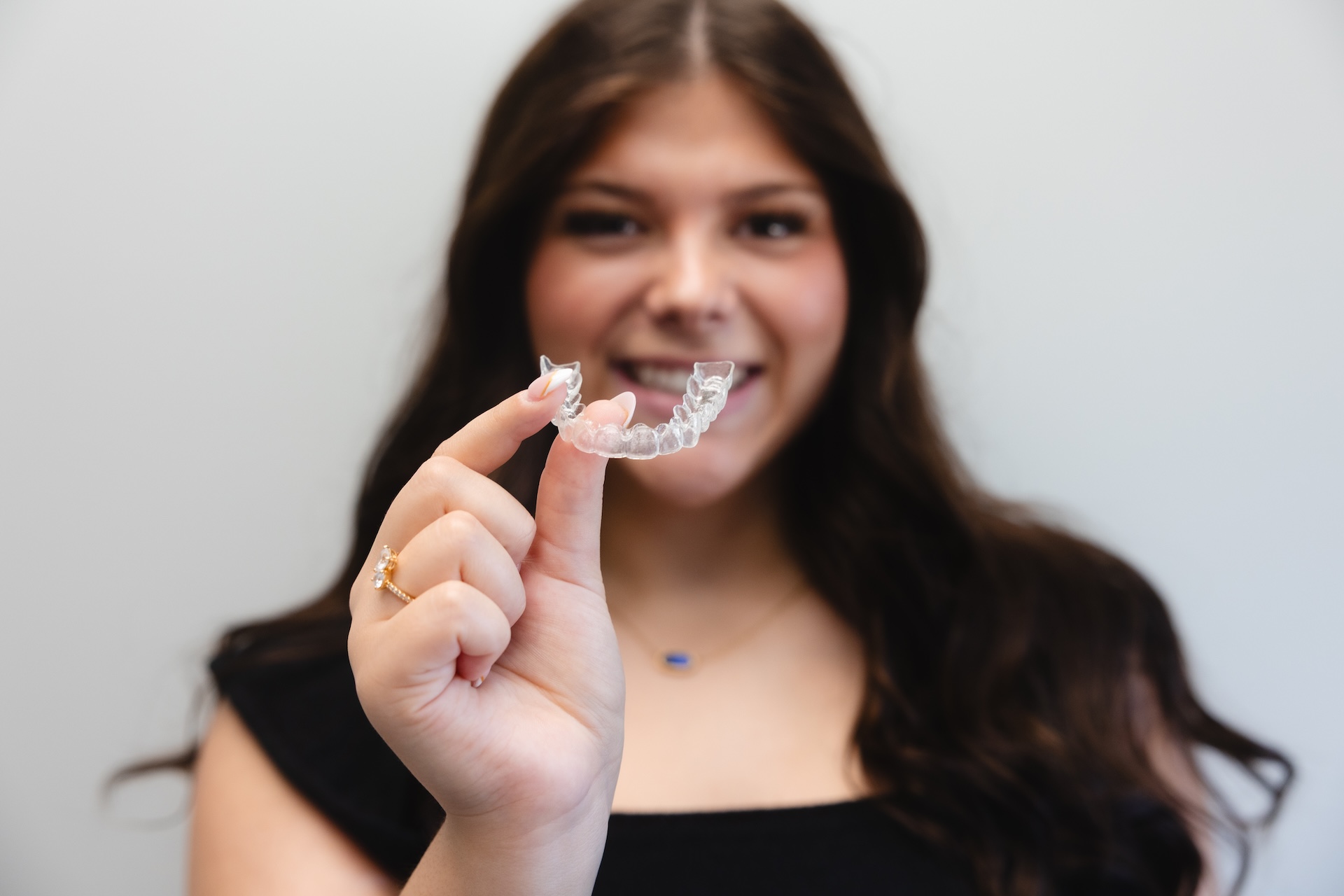
Invisalign uses clear, removable aligners made from smooth plastic to straighten teeth without metal brackets or wires. We begin with digital impressions using our iTero scanner, creating a precise 3D model of your teeth and bite. This technology allows us to plan your entire treatment digitally and show you the predicted results before you start.
Each set of aligners applies targeted pressure to specific teeth, moving them incrementally toward their final positions. The aligners are manufactured using 3D printing technology, with each tray precisely engineered to achieve specific tooth movements based on your anatomy. You wear each aligner for 20 to 22 hours daily, removing them only for eating, drinking anything other than water, and oral hygiene. Most patients receive new aligners every one to two weeks, with check-ups every six to eight weeks to monitor progress.
Invisalign Attachments and Buttons Explained
Invisalign attachments are small, tooth-colored composite resin bumps we strategically place on certain teeth to help aligners grip better and achieve more complex movements. These attachments remain virtually invisible but significantly improve treatment effectiveness for rotations and other movements that aligners alone might struggle to accomplish.
Different attachment shapes serve specific purposes: rectangular attachments help with rotation movements, beveled attachments assist with tipping corrections, and optimized attachments are custom-designed for individual teeth based on your treatment plan. Buttons are small metal or composite anchors that allow for elastic wear when additional force is needed for bite correction. Most patients adapt to attachments within a few days and barely notice them during treatment.
Should I Choose Clear Aligners or Metal Braces?
While we provide Invisalign at our practice, we also believe it's important for patients to understand how clear aligners compare with traditional braces. When braces are the better clinical option, we can refer you to an orthodontic specialist we trust. The choice typically depends on several factors, such as the complexity of your case, your lifestyle preferences, and your commitment to treatment compliance. Each option has distinct advantages that make it better suited for different clinical situations.
Traditional metal braces excel at treating complex cases involving severe crowding, significant bite issues, teeth requiring major rotational movements, and cases needing precise root positioning. Since they're fixed to your teeth, there's no compliance issue. They work continuously regardless of patient cooperation and provide predictable results for severe malocclusions.
Clear aligners offer superior aesthetics and convenience for patients with mild to moderate alignment issues who can commit to wearing them consistently. You can eat whatever you want, maintain normal oral hygiene routines, and remove them for special occasions. However, they require discipline. Inconsistent wear will extend treatment time significantly.
Which Treatment Works Better?
Treatment effectiveness depends largely on case complexity rather than the method itself. Research shows comparable results for mild to moderate crowding, spacing, and minor bite issues when patients follow instructions properly. Traditional braces maintain an advantage for complex cases requiring precise control over root positioning, severe rotations, or significant vertical movements.
Success rates remain similar when patients follow instructions properly. The key difference lies in predictability. Traditional braces show more consistent timelines because compliance isn't a variable, while Invisalign results depend heavily on patient cooperation and discipline.
Comparing Your Orthodontic Options
Understanding the complete comparison helps you make an informed decision:
- Traditional Metal Braces: Most versatile for difficult movements, no compliance requirements, fastest treatment for complex cases. Disadvantages include visibility, dietary restrictions, and more challenging oral hygiene routines
- Ceramic Braces: Tooth-colored brackets blend with natural teeth, function identically to metal braces. They offer improved aesthetics while maintaining full treatment capability for complex cases
- Invisalign Clear Aligners: Nearly invisible, removable for eating and cleaning, no dietary restrictions, comfortable smooth plastic material. Requires consistent daily wear for optimal results
Each option suits different patient profiles: traditional braces work best for severe crowding and complex bite issues; ceramic braces appeal to patients wanting discretion without sacrificing treatment capability; Invisalign excels for adults in professional settings or anyone prioritizing aesthetics and convenience while managing mild to moderate alignment issues.
Which Orthodontic Treatment Is Less Painful?
Most patients find Invisalign more comfortable than traditional braces, though both treatments involve some discomfort as teeth move. With braces, you might experience soreness from brackets rubbing against your cheeks and lips, especially during the first few weeks as your mouth adapts. Orthodontic wax helps protect soft tissues, and over-the-counter pain relievers manage adjustment discomfort effectively.
Invisalign typically causes less acute discomfort because the smooth plastic doesn't irritate oral tissues like metal brackets can. However, you'll still feel pressure when starting each new aligner, usually lasting one to two days. This pressure indicates the aligners are working. Most patients describe it as a tight feeling rather than sharp pain.
Emergency visits are more common with braces due to broken brackets, loose wires, or severe irritation issues that require immediate attention. Clear aligners rarely cause urgent problems, though you might occasionally crack an aligner or lose one while eating out.
Types of Braces: Brackets and Wires Available
Modern orthodontics offers several bracket types engineered for different aesthetic and functional needs:
- Metal brackets: Made from high-grade stainless steel or titanium alloy, these are smaller than brackets from previous decades while providing superior strength and reliability
- Ceramic brackets: Made from polycrystalline or monocrystalline alumina, these blend with natural tooth color while functioning identically to metal versions
- Self-ligating brackets: Use built-in clips or doors instead of elastic ties to hold the archwire, potentially reducing friction and appointment time
- Combination approach: Ceramic brackets on front teeth with metal brackets on back teeth balances aesthetics and function
Archwire technology has advanced significantly, with heat-activated nickel-titanium wires that provide gentler, more consistent forces. These wires activate at body temperature and maintain optimal pressure as your teeth move. Copper-nickel-titanium wires offer even more gradual force delivery, reducing discomfort during initial stages of treatment.
What Should I Expect During Orthodontic Treatment?
Your orthodontic journey follows a predictable timeline with specific milestones:
- Comprehensive evaluation: Digital X-rays, intraoral photos, and 3D scans help us assess your bite, jaw alignment, and facial proportions while discussing your treatment goals
- Treatment planning: We create a customized plan with realistic timelines and digital treatment simulation showing predicted results
- Treatment initiation: Braces placement takes one to two hours; Invisalign starts with attachment placement and your first few aligners
- Regular monitoring: Braces require adjustments every four to six weeks; Invisalign patients visit every six to eight weeks for progress checks and new aligner sets
- Active treatment phase: Consistent home care and appointment attendance ensure optimal results within predicted timeframes
Oral hygiene becomes critically important during orthodontic treatment. Braces require special cleaning techniques including interdental brushes, water flossers, and fluoride rinses to prevent white spot lesions around brackets. Invisalign patients must brush and floss after every meal before reinserting aligners to prevent trapped food and bacteria.
How Long Does Orthodontic Treatment Take?
Treatment duration depends primarily on case complexity, patient age, and compliance with instructions. Simple spacing or minor crowding issues typically resolve in eight to twelve months, while moderate cases usually require twelve to eighteen months for complete correction. Comprehensive cases involving significant crowding, bite correction, or multiple issues typically take eighteen to thirty months for optimal results.
Invisalign treatment times are comparable to braces for similar cases. The key factor is consistent wear. Aligners only work when they're in your mouth for the prescribed 20 to 22 hours daily. Patients who wear aligners as directed typically finish within their predicted timeline, while inconsistent wear can extend treatment significantly.
Age influences treatment duration as adult bone density is higher than adolescent bone, potentially slowing tooth movement due to more mature bone structure. However, adult patients often demonstrate better compliance with oral hygiene, appointment schedules, and aligner wear, which can offset biological factors.
Maintaining Results After Orthodontic Treatment
Retention is crucial for maintaining orthodontic results long-term, as teeth naturally tend to shift back toward their original positions throughout life. This tendency, called relapse, is strongest during the first twelve months after treatment when surrounding tissues are still adapting to new tooth positions.
Most patients receive removable Essix retainers (clear plastic) or Hawley retainers (wire and acrylic) to wear nightly after an initial period of full-time wear. Some cases benefit from fixed retainers, thin wires bonded behind front teeth for permanent retention. The choice depends on your original problem, treatment method, and individual risk factors for relapse.
Long-term success requires consistent retainer wear and regular dental care throughout your lifetime. Even years after treatment, occasional retainer wear helps maintain alignment. Our comprehensive dental services include retention monitoring to help preserve your orthodontic investment, with retainer checks during regular dental visits.
Is Orthodontic Treatment Right for You?
Orthodontic treatment benefits extend beyond aesthetics to include measurable improvements in oral health, function, and quality of life:
- Easier cleaning: Straight teeth reduce plaque accumulation and decrease gum disease risk by eliminating hard-to-reach areas
- Better function: Proper bite alignment improves chewing efficiency and reduces abnormal tooth wear that can lead to fractures
- Jaw comfort: Aligned teeth can alleviate TMJ symptoms in patients with mild joint dysfunction by reducing muscle strain
- Long-term health: Reduced risk of tooth loss, with properly aligned teeth lasting longer than crowded teeth
- Confidence boost: Many patients report improved self-esteem and social confidence after completing treatment
Age is rarely a barrier to orthodontic treatment, with many orthodontic patients now being adults seeking the benefits they missed earlier in life. Adult treatment considerations include existing dental work, gum health status, and lifestyle factors, but healthy teeth can be moved at any age through the same biological processes.
The best candidates are motivated individuals committed to maintaining excellent oral hygiene and following treatment instructions consistently. Whether you choose traditional braces, clear aligners, or other options, success depends more on your dedication than your age or case complexity.
Start Your Orthodontic Journey with Edgewood Dental Associates
Orthodontic treatment has never offered more sophisticated options for achieving a healthy, beautiful smile that functions optimally. Edgewood Dental Associates is committed to helping you understand all your orthodontic options and make an informed decision about your smile transformation. Our experienced team uses advanced digital technology to create personalized treatment plans that deliver predictable, lasting results tailored to your unique situation.
Contact our Pittsburgh practice to schedule a comprehensive consultation where we'll evaluate your smile, discuss your goals, and help you choose the treatment that's right for your unique situation. You can also read what our patients say about their orthodontic experiences or learn more about what to expect during your first visit with our experienced team.

