
Published
If you've been told a tooth can't be saved, one question usually comes up before anything else: which replacement is going to last the longest? It's an important question, but it's only part of the decision. Longevity matters, but so do your jawbone health, budget, treatment timeline, and the condition of the surrounding teeth.
In general, dental implants tend to last longer than dental bridges because they replace both the tooth and its root. A well-maintained implant can last for decades, often a lifetime, while most bridges provide excellent function for around 10 to 15 years before needing replacement. That doesn't automatically make implants the right choice for everyone, though.
The team at Edgewood Dental Associates help patients throughout Edgewood, Regent Square, Squirrel Hill, and Pittsburgh's East End weigh these options every day.
In this guide, we'll compare implants and bridges from every angle, including longevity, cost, maintenance, recovery, and long-term oral health, so you can understand which solution is the better fit for your smile.
Quick Overview
- Dental implants are generally the longest-lasting tooth replacement, with the implant itself often lasting decades or even a lifetime with proper care.
- Dental bridges remain an excellent solution for many patients, especially when treatment time, bone health, or budget make implants less practical.
- The biggest difference isn't just how long they last, but rather how they support your jawbone, surrounding teeth, and long-term oral health.
- Lifespan depends on more than the restoration itself. Daily hygiene, gum health, regular dental visits, and habits like teeth grinding all play an important role.
- The right choice isn't always the one that lasts the longest. Your overall oral health, goals, timeline, and personal circumstances all factor into the recommendation.
Why Longevity Comes Down to More Than the Material
It's natural to assume the lifespan of a dental restoration comes down to what it's made of. Porcelain or zirconia, metal alloy or ceramic. Materials do matter, but they're not the whole story. What really drives the gap between implants and bridges has more to do with what's happening below the gumline than anything you can see in the mirror.
The core difference is simple: a dental implant replaces the tooth root, and a bridge doesn't. A bridge spans the gap by anchoring to the healthy teeth on either side, leaning on them for support. That can be a perfectly sound approach, but it means the bridge always depends on those neighboring teeth staying stable, strong, and healthy.
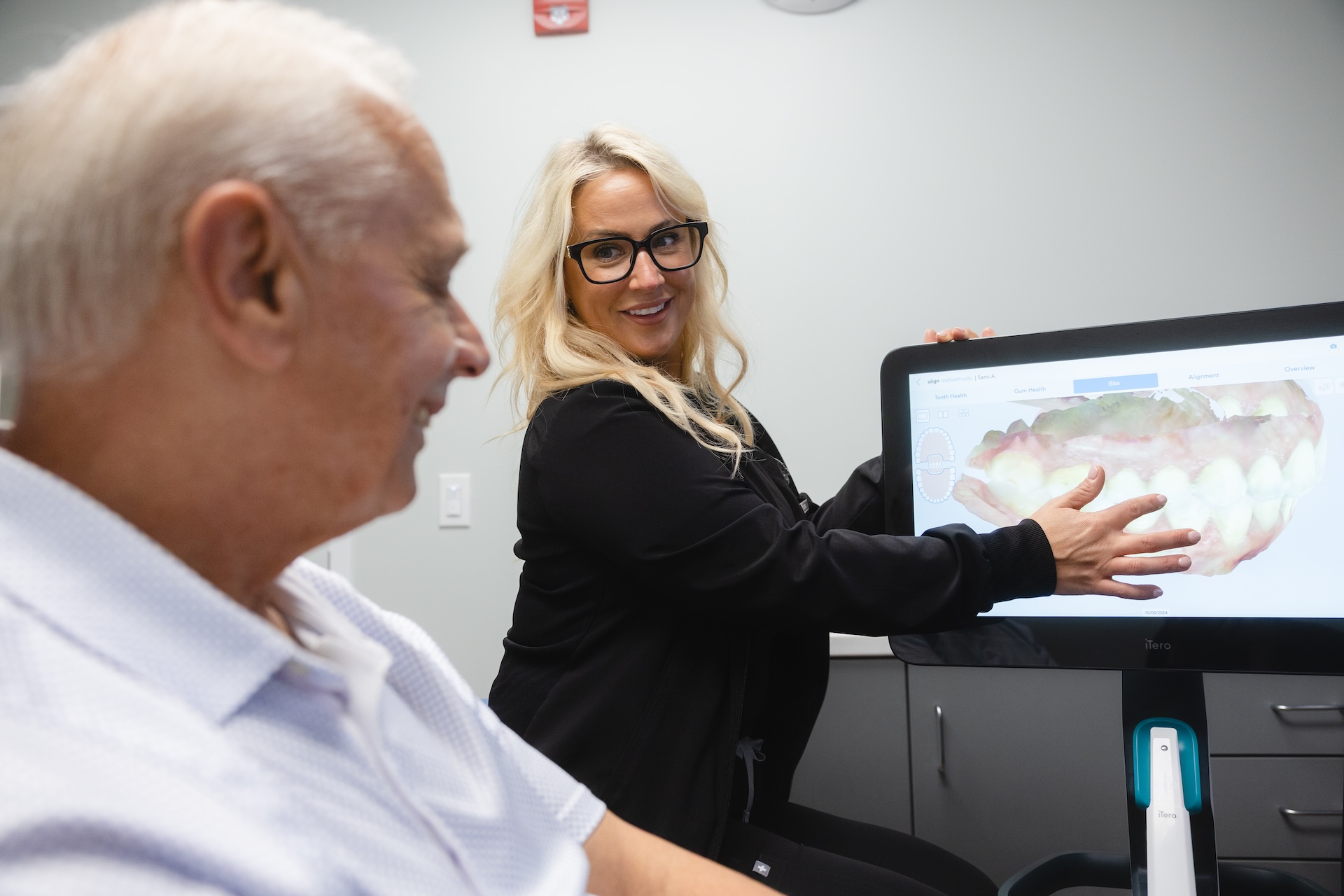
An implant works differently. It's anchored directly into the jawbone, so it functions the way a natural root does. It stands on its own, and it actually helps preserve the bone around it. Root versus no root is the variable that shapes almost everything else: how each option handles daily use, how the bone and tissue behave over the years, and how long each one realistically lasts. It's the thread worth following as you weigh this decision. If you're unsure which path fits your situation, our team can walk you through your options during a consultation, drawing on the advanced technology we use to plan precise, lasting restorations.
How a Bridge Holds Up Over Time
A traditional dental bridge is a well-established solution, and understanding how it's built explains both its strengths and its limits. The bridge spans the gap left by a missing tooth, but it doesn't stand alone. It relies on the two natural teeth on either side, called abutment teeth, which get filed down so crowns can be placed over them. Those crowns anchor the artificial tooth in the middle and hold everything in place.
For a lot of people, that structure serves well for years. A bridge can realistically last 10 to 15 years, sometimes longer with good upkeep. But there are a few spots where things shift over time, and they're worth knowing:
- The abutment teeth carry extra load. Because they've been reshaped and now support more than their own share, they can become more vulnerable to decay or stress as the years add up.
- The bonding cement breaks down gradually. As it does, bacteria can work their way underneath the crown.
- The bone underneath quietly shrinks. Without a tooth root to stimulate it, the jawbone in that area slowly loses density. This is one reason many patients consider dental implants, which replace the root and help preserve the surrounding bone.
None of this means a bridge is the wrong choice. It means it's a choice with a timeline, and knowing that timeline is part of making a well-informed call. If you'd like to talk through your options, reach out to our team and we'll help you find the right fit.
Why Implants Tend to Last Much Longer
The structure of an implant is a big part of why it earns its reputation. Unlike a bridge or a partial denture, an implant doesn't just replace the visible part of a missing tooth. It replaces the root.
A small titanium post is placed directly into the jawbone, where it gradually fuses with the surrounding bone through a process called osseointegration. Over time, that post becomes structurally part of your jaw, much the way a natural root would be. A custom crown is then attached on top to restore the look and function of the tooth. With CEREC technology, that crown can often be designed and placed efficiently for a precise fit.
That root-replacement function is what sets dental implants apart for the long haul. Because the post sits in the bone, it helps preserve the jaw over time. When a tooth is lost and left unreplaced, the bone in that spot tends to shrink. Implants interrupt that process.
The crown does have a shorter lifespan. Depending on wear, bite forces, and maintenance, it may need replacing every 10 to 20 years. But the implant post itself can last decades, and for many people, a lifetime. No neighboring teeth get filed down. No adhesives, no removable parts. It works independently, so it doesn't put extra stress on the teeth around it. That self-contained design is a large part of why implants tend to outlast other tooth replacement options. If you're weighing your choices, our team is happy to talk you through them.
The Role Your Own Habits Play
A long-lasting result doesn't happen on its own. Whether you choose a bridge or an implant, what you do at home every day shapes how well it holds up.
With a bridge, cleaning takes a little more intention. The pontic, which is the false tooth suspended between your two crowned abutment teeth, sits just above the gumline rather than anchoring into it. That gap is where food and bacteria collect, and if it isn't cleared out regularly, the teeth underneath can develop decay. Most people use a floss threader or a water flosser to clean beneath the pontic, and it genuinely makes a difference. It's not complicated, but it is a step you have to remember.
Implants are a bit more forgiving. You brush and floss the way you normally would, without working around a suspended tooth. That said, they aren't maintenance-free. Gum health still matters enormously, and habits like grinding or clenching put stress on implants and bridges alike. If you're concerned about your gums, our gum disease treatment can help keep things healthy.
The restoration with the better long-term track record still depends on the person caring for it. A well-maintained bridge can serve you for many years. A neglected implant won't reach its potential. Your daily habits are always part of the equation.
When a Bridge Still Makes Sense
Habits matter, but so does the bigger picture: your oral health, your timeline, your budget. Implants are often called the gold standard for tooth replacement, and in many cases that's true. But gold standard doesn't mean right for everyone, and it's worth saying so plainly.
A bridge can be the smarter choice in a few situations:
- Significant bone loss. If there isn't enough bone to support an implant, you'd first need a bone graft, which adds time, cost, and recovery. A bridge can restore function and appearance without that extra step.
- A tighter budget right now. Implants are a larger upfront investment, and not everyone is in a position to make that work today.
- A faster timeline. A bridge doesn't require the healing period an implant does, so the whole process moves more quickly.
Our goal is never to steer you toward the most advanced option for its own sake. It's to help you find the one that actually fits your life. We accept insurance and can walk you through the cost ranges for each option so the numbers aren't a mystery; the exact figures get reviewed during your consultation, where we look at your specific situation together.
Frequently Asked Questions
Is an implant always better than a bridge?
Not always. Implants usually last longer and protect the jawbone, but a bridge can be the better fit when bone loss, timeline, or budget are part of the picture. The right answer depends on your mouth, not a blanket rule. Our team can walk you through your dental implant options in detail.
Does getting a bridge harm the neighboring teeth?
The teeth on either side have to be filed down to hold the crowns, so they take on more wear and a bit more risk over the years. That's one reason we look closely at the health of those teeth before recommending a bridge, often using our advanced imaging technology to get a clear picture.
How long does an implant actually take from start to finish?
It varies. The post needs time to fuse with the bone before the final crown goes on, so the full process usually spans a few months. A bridge moves faster, which is part of what makes it appealing when time matters.
Still Deciding Between an Implant and a Bridge?
If you've made it this far, you've probably realized there isn't a universal "best" option, only the one that's best for your mouth. The right choice depends on factors you can't determine from an article alone, including your bone health, the condition of the neighboring teeth, your bite, and your long-term goals.
That's exactly what a consultation is for. The team at Edgewood Dental Associates will evaluate your smile, explain the pros and cons of each option as they apply to you, and answer every question along the way. Our goal is to help you make a decision you'll feel confident about for years to come.
If you're ready to replace a missing tooth or want a second opinion before moving forward, call us at (412) 242-4022 or schedule a consultation with our team. We'll help you understand your options and build a treatment plan that fits your health, your budget, and your future.

